mrsrenzcom

Connect learning with real life using projects and activities in upper elementary!

  • mrsrenzcom
  • Home
  • About Mrs. Renz
    • About Me
    • Contact
  • Blog
  • File Cabinet
  • Purchaser Corner
    • 50 States Project Links
    • Biography Project Links
    • Mastery Club Links
    • Oregon Trail Links
    • Poetry Analysis Links
    • Poetry Links
  • Shop

Read Picture Books to Your Fourth Graders the First Week of School

I’m going out on a limb with a message I feel is super important. Don’t read a novel to your upper elementary students the first week of school.  Yes, really!  Don’t do it!

Instead, read picture books!  Read lots of them!  Picture books are fun!  They aren’t just for little kids.  Picture books are for big kids and adults, too.  Your school year together is going to be fun so shout it out by reading fun books (keep reading to find out my top 10 favorite picture books).  Model it by doing it.

The real reason to read picture books is to encourage students to read independently at their reading level.  Some of your students are not going to be good readers.  Some of your new students are excited for the new year but scared because they’re not good readers.  They know it, but they don’t want their friends to know it.  By reading picture books you take the focus off individual reading skills by asking ALL of your students to read picture books the first few weeks of school.  Silent reading can be silent torture for students who hold a novel of a much higher reading level than they are capable of reading.  It helps them “look” like a reader. But silently, they are staring at pages of words without meaning.  They are just waiting for the time to turn the page, timing it with their peers.  Silent reading is torture for struggling readers trying to save face.

During the first week of school, take all of your students to the library to check out and read picture books.  Tell them that’s their homework for the first week of school.  Have students fill out a story elements planner (get yours free here).  Picture books are a great way to teach and reinforce story elements.  Have kids record reading minutes in a reading log.  Back at school, don’t do “sharing”, do book reviews and let students tell their friends what their favorite picture books are, and why.Next, use picture books to teach literary story elements.  As you read, have students identify the setting, plot, characters, theme, conflict, resolution.  Discuss these when you’re finished.  Finding story elements will become second nature in no time.  (Click play to see inside the flip book.)

https://mrsrenz.com/wp-content/uploads/2017/08/Literacy-Flip-Book-by-Mrs.-Renz-Class.mp4

You can teach character traits through the use of picture books.  Picture book authors describe their characters in a short time period, so as you read aloud, have students identify the character traits and point to them on your character traits word wall.  This is a great way for you to point out the traits you expect for your year together.

As you read, connect the text and pictures, and ask students to relate the story to their lives (text to self).  Relate the story with other texts (text to text), and with the world (text to world).  Connecting deepens comprehension.

MrsRenzClassTopPicksBookList

Save a spot on your bulletin board to post an, “Our Top Picks Books List.”   Allow students to nominate, review and rate their books.  Have students fill out a short book review which they sign and rate from 1-10.  Students complete the information on the wall chart and add their rating sheet to the ring so others can flip through and find the written review.  Students LOVE to add their name to the wall and you will find that students read each others’ reviews to get book suggestions.  This gives struggling readers to great reason to read more books.

Keep reading to find out what books are my favorite and WHY!

Here’s my top picture books to read aloud to your third, fourth, and fifth graders the first few weeks of school.  NOTE:  I have links to Amazon.  I am not an Amazon Affiliate and receive no compensation. I am offering the links to help.

1)  Math Curse, by Jon Scieszka and Lane Smith.  Math lovers will enjoy this book.  At the beginning of the year, I always poll my students on their feelings about math.  I’m always discouraged to hear that many students either don’t like math or it is their least favorite subject. I accept that as a personal challenge to turn that attitude around.  This book helps.  Math Curse is a fun story where a boy wakes up and sees math problems in everything he does.  Read it and point out real world math problems as you read it!

2)  Bad Case of Stripes, by David Shannon. This book tells of a girl who worries what others think of her as she picks out her first day of school outfit and later develops a case of the stripes. This story has a great theme, and in the end, she learns to be herself and not worry what others think.  You can talk about fitting in, being embarrassed, and trying to impress others.

While you’re reading, ask students to listen for the “great word choice”.  There’s lots of it!  Listen for similes and find the vivid verbs and awesome adjectives.  Listen and watch a video of the book at Storyline Online (12:00)

3)  The Stinky Cheese Man and Other Fairly Stupid Tales, by Jon Scieszka & Lane Smith.  This book is just plain fun.  Students love the title.  I love it!  What kind of author says stuff like this?  I think it’s important as a teacher to have fun with your students.  You can accomplish a lot and gain trust with your students using laughter and by having fun.   Point out the writer’s use of voice.  If you’re teaching reading genres, read this when you’re studying fairy tales, folk takes, and fables.  Read the traditional stories and then read the versions in Stinky Cheese Man for a fun comparison.  See the book Amazon.

4)  Yo!  Yes?  by Chris Raschka.  This book has very few words but the message is big;  be a friend!  After reading the book, have a community circle talk about the message and its importance to a developing a positive classroom climate and culture.  Have students write a journal entry about what how to offer friendship to someone new.  See the book on Amazon.

5)  Thank You Mr. Falker, by Patrica Polacco.  This book tells the story of the author as a struggling reader.  At the height of the her struggle, the girl is a fifth grader and other kids are making fun of her.  Mr. Falker, her fifth grade teacher, works with her and helps her become a good reader.  The theme is never give up and hard work pays off.  The book is written from the third person point of view, but the story is actually about the author herself (first person), Patricia Polacco.  I love the message of this book.  You will have many students who can relate to the girl’s struggle.  Listen and Watch at Storyline Online (16:50):

6)  One, by Kathryn Otoshi.  This is a great book that highlights the importance of friends standing up to bullies. The characters in the book are colors, with blue being be main character and red being the bully.  The colors stand up and count.  This is a fun book with a great message.  Listen to Kathryn Otoshi read her book, One, while students act it out.

7)  That is NOT a Good Idea!  by Mo Willems.  This book is another simple, fun book that you will catch you off guard as it doesn’t end like you think!  Will the fox catch the hen?   It is great for making inferences. Be sure to have students predict how the book will end before reading it aloud.  You can have thoughtful discussions about assumptions of book. Relate it to making assumptions about new classmates as well.  Amazon link so you can see more of the book.

8)  What Do You Do With An Idea?  by Koki Yamada.  I suggest this book for the important message it sends.  You can change the world with an idea.  It teaches students to listen to their inner self and believe in their own ideas.  Our students have great ideas if we encourage them.  We don’t know it all, and can learn a lot from the students we teach.  See the book on Amazon.

9)  Salt in His Shoes, Michael Jordon in Pursuit of a Dream,  by Delores Jordan with Roslyn M. Jordan.   Michael Jordan’s mom and his sister tell this great story of Michael’s hard work, determination and courage to achieve his goal of being a great basketball player.  Michael’s mom puts salt in his shoes and has faith that Michael will grow taller and be a great player. Definitely relate this book to the struggles students may encounter during your year together.  Stress the importance of never giving up and continuing to work even though things may get difficult.  Winners never quit!  See more of the book on Amazon.

10)  The Giving Tree, by Shel Silverstein.  Shel Silverstein is a great writer.  I like the theme of this book. The tree loves the boy in the story unconditionally.  The boy takes from the tree until the tree has nothing left to give.  You can talk about the tree being generous and selfless and what it means to give to another in this manner.  Talk about point of view from the boy’s perspective and how it is different from the tree’s point of view.  Discuss the boy’s motives and discuss how he takes and takes from the tree and isn’t the best friend to the tree that he could be, yet the tree is truly happy in the end.  Again, good discussion to be had with your students.  Excerpt and short video from Shel Silverstein’s website.

~ What to Read Week Three and Beyond ~

After a few weeks of reading picture books, begin reading novels.  I like to read novels that students won’t typically pick up and read.  I like to assign novels that build background knowledge for science or social studies units.  A favorite is Bound for Oregon, by Jane Van Leeuwen, teaching about westward expansion and the Oregon Trail.  It teaches of life and difficulties along the trail and talks about trail landmarks so when we study the unit, students have a great foundation.

Periodically throughout the year, reintroduce picture books.  As you read great picture books, make note of what you could teach using the book and repeat it next year, too.  You will soon have a great read aloud program interspersed with picture books.

~ Accountability for Reading ~


Be sure to stress the importance of reading for fun and lifetime enjoyment.  Ask students to read at home and fill out a monthly reading log.  Students record the number of minutes they spent reading or the number of pages (your choice).  You can incorporate math skills by having students graph their results.  These reading logs also make great data collection tools!

What are your favorite picture books for reading to upper elementary students?

Don't Read a Novel to Your Students the First Week of School

Find it Fast on Mrs. Renz' Class on TpT

  • Reading Calendars with Lifetime Updates (Editable)
  • Book Projects, Genre Posters, Literary Elements Posters & Story Elements Flip Book Bundle
  • Literary Elements Posters & Story Elements Flip Book
  • Character Traits Posters (Growing Set)
  • Story Elements Story Map FREEBIE

Teaching Strategies

Celebrate Independence Day!

Extra, extra, read all about it.  There’s a FLASH 1 day only sale coming your way!!  In celebration of Independence Day, I am offering freebies and sales for followers of my blog, Facebook, and Instagram.  It pays to be a Mrs. Renz Class insider!!

These offers are good at Mrs. Renz Class TpT Store, and are good on July 4th, 2017 only.  Hurry in and grab your FREEBIES and discounted U.S. History and Presidential items while the deals are still hot!

Are you wondering what’s on sale?!  Check it out. 🙂

  • Featured U.S. History and Presidential items are 20% off! (Click on the thumbnail to see the full product, including one of my top 10 bestsellers, the 50 States Research Project).
                               
  • FREE US Flag clip art

  • FREE red white and blue border sets for personal and commercial use (FREE only on July 4th!!)


  • FREE bright red white and blue border sets for personal and commercial use (FREE only on July 4th!!)


Happy Shopping!!  Please feel free to share this post with friends and co-workers and remember to leave positive feedback on items that you love, so these sales and freebies can continue.  🙂

  • Passport to the USA State Report Project & Web Link Access
  • If You Lived in Colonial Williamsburg in Colonial Days Comprehension Packet
  • Mount Vernon PowerPoint Slideshow & Posters (Real Photos)
  • Colonial Math Plan a Meal with Pounds, Shillings and Pence
  • George Washington’s Gardens Area & Perimeter Unit
  • Mount Vernon Gardens PowerPoint Slideshow (Real Photos)
  • Social Studies Helper Reference Charts
  • Colonial Writing Paper Set
  • Clip Art:  50 States and Capitals Pencils
  • Clip Art:  Colonial Frames
  • Clip Art:  U.S.A. Flags (Freebie)
  • Clip Art:  Patriotic Borders and Frames – Bright Reds
  • Clip Art: Patriotic Borders and Frames #2

Teaching Strategies

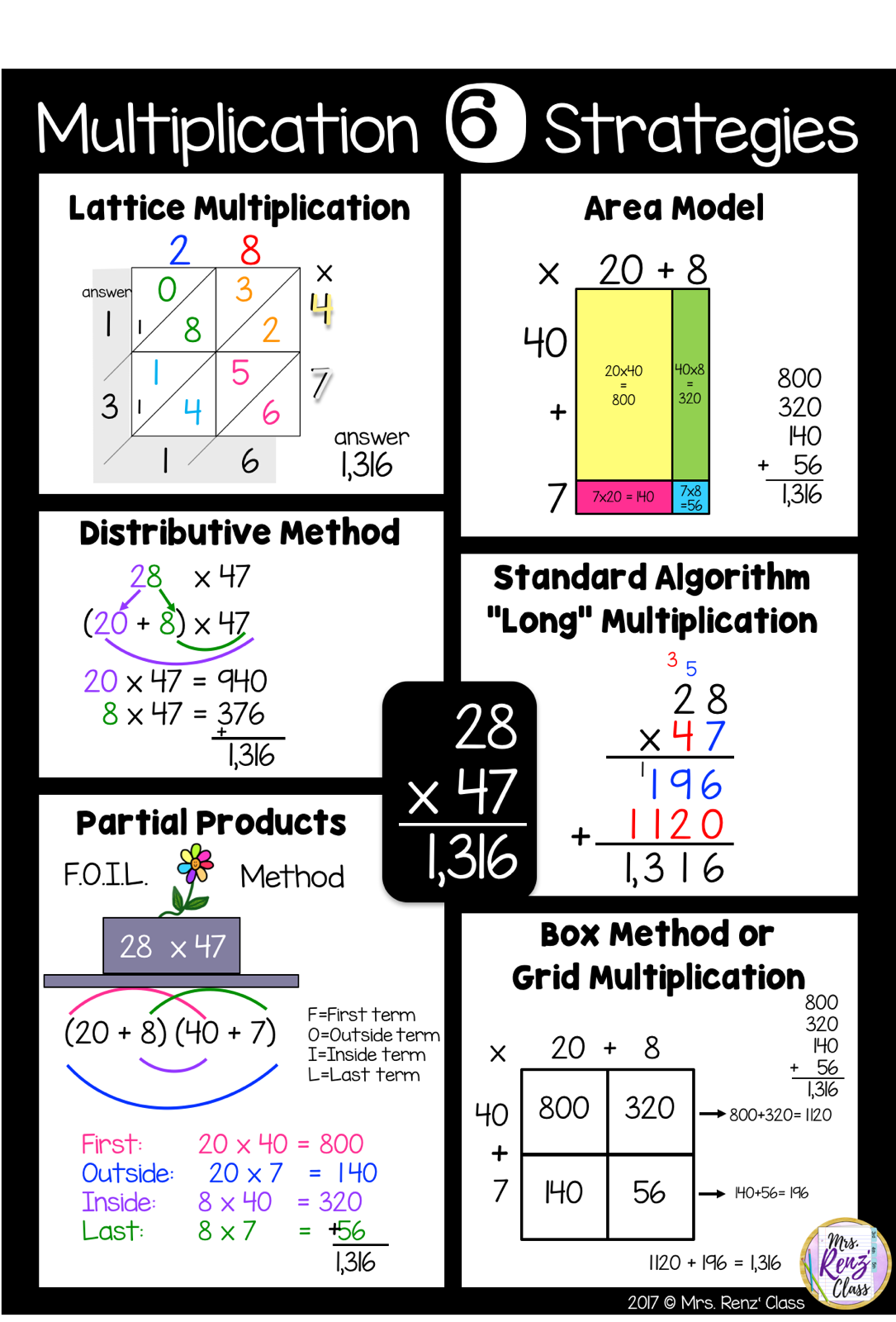
Multiplication Mayhem – Teaching Multiplication Strategies the Easy Way

Are your students having a tough time grasping multiplication?  Do you find that your students are struggling to understand the basics?  I’ve watched far too many students walk through the door of my classroom saying,”I hate math” or “math is my least favorite subject”, which just broke my heart.  Math is near and dear to my heart and something that I find…dare I say, FUN?  Math is all around us, and multiplication is an essential skill that all kids should know.  Without multiplication, how are you going to tell how much you save from that spectacular sale at your favorite store?  Or how much you’re going to tip the waiter at dinner?  Or how much sales tax you’re paying?

Without the basic and fundamental skills to master multiplication, students get frustrated, defeated, shut down, and in turn dislike learning and school.  NOT in this teacher’s classroom!!  When students understand how to use their skills, they begin to feel confident, excited, and motived to continue learning.  And they too start to think math is FUN!!

So…I’m sure you’re asking HOW do I make math fun?!  HOW do I get students to understand multiplication?

  1. Teach the basics.  Yes, students do need to learn their times tables!  My best advice, practice, practice practice!  Paper and pencil, task cards, online math multiplication games, Boom Learning games, etc.  One of my favorites is giving students a pair of dice, rolling, and completing the multiplication fact based on the numbers on the face of the dice.  You can also do this with dominos!  Flash cards also work great to help students master their facts.  It’s also imperative that students understand their basic addition and subtraction facts prior to moving on to mastering multiplication as addition and subtraction play a role in multiplication with borrowing and carrying.  Try spinner addition and subtraction flash cards to help those struggling students master their facts (and it helps when the flash cards look the same so they fit in with their classmates)
  2. Connect math to real life!!  Help students make sense of WHY they are learning multiplication.  Motivation increases 2 fold when students understand the real life connection.
    Examples: Calculating how much an item is on sale, how much sales tax you are paying, how much to tip your waitresses
  3. Don’t teach tricks to get an easy answer.  Teach the math!  Tricks will be forgotten.  Logic will remain so students can reason out the task at hand.
  4. Put easily accessible references at their fingertips.   Help students become independent with their learning and take ownership rather than constantly asking for help, such as multiplication charts.  I also strongly believe in posting math vocabulary words on my wall.  This helps students understand the language of math.  If they understand what they are reading and being asked they are much more likely to be successful.  I LOVE my math word wall for this reason, and I know my students do too.  I constantly catch my students looking up at them and referring to them.  Ahh the beauty of allowing students to be independent learners. 🙂  Another great reference tool to put at the fingertips of your students is a math reference chart.  It is jam packed with all kinds of math reference tips.  This will help your students become more independent.  I also like sending reference charts home with students, so that parents can help their child with math skills that they may be more uncomfortable with.

  5. Provide students with ample opportunities to practice their skills in a non-graded way.  This helps provide students with the ability to practice without the associated pressure.  Math centers are a great way to do this. Students receive a task card at the center, solve, and self check using the answer key.
  6. Teach multiplication with body movements, visuals, stories, and manipulatives. Teach area when you teach the times tables.  You can relate words like 7 “by” 8 as 7 x 8.  For great visuals and stories, I love using Times Tables the Fun Way!  It’s a visual program with stories that students can relate to and remember the math facts.
  7. Teach other ways to multiply!  Use Lattice multiplication.  Area method.  Arrays. Partial Products. Grid method.  Traditional method. Using different methods allows students to choose the one they prefer. 

And remember….Make math fun and relevant!

  • Flash Card BUNDLE – addition, subtraction, multiplication, division
  • Flash Card Spinners – Multiplication/Division
  • Flash Card Spinners – Addition/Subtraction
  • Multiplication Charts
  • Math Vocabulary for Other Grades
  • Math Word Wall Posters – Grade 4
  • Math Helper Reference Charts (grades 3-5)
  • Multiplication Strategy Posters & Flip Books (and more)

Teaching Strategies

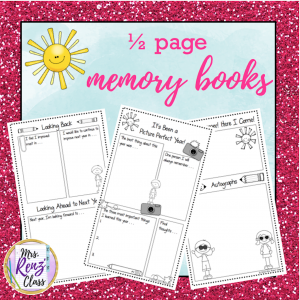
Create End of Year Memory Books

I can’t even believe it’s THAT time of year again…the end of the year!  As you prepare to send your students off for the summer and on to the next grade, you want to make sure that you send them off with their memories in hand.

Keep students writing by using memory books that are ready to print and go.  Students will reflect on the last year (and you get in some last minute writing practice!) and look back on their academic improvements, best memories, and can get signatures from their classmates.  As the year winds down, we know that teachers have so much to do with tons of things to do to get ready for report cards, end of year records, and readying your classroom for summer.  When you hand out memory books, students start busily writing down all of their memories and filling out all of the pages, which gives you so previous time to prepare for the summer!

Half page format memory books for grades 2-5

Teacher Tip: Does your school do a yearbook signing day?  Do you have students who didn’t get a yearbooks and feel left out?  Problem solved!  I have found that when yearbooks come out there are always a few students who didn’t get to purchase a yearbook.  I printed off some of these memory books, and handed them to the students who didn’t have a yearbook.  On yearbook signing day, these kids felt included and were excited even though they didn’t get the official school yearbook.  They had their memory book that were able to ask their classmates to sign, and still had a great keepsake from the school year.Teacher Tip: Budgets running low at the end of the year? Paper supply running low?  We were always under a paper or copier count shortage at the end of the year so the smaller size was a fun size and helped our school budget!  I used whatever paper was left in the copy room, random color papers, and students loved that their book was multi colored!

  • Memory Book Folded
  • Other Memory Books (1/2 sheet and full page for grades 2-6)

Teaching Strategies

Projects Galore

Students LOVE learning when they understand WHY they are learning what you are teaching them.  Connecting learning to real life is essential to engage students in the classroom.  I have had the most success connecting with even my most reluctant learners through the use of projects.  The projects I use in my classroom integrate real life, technology, and the skills that you are required  to teach.  Here are some of my favorite projects to engage ALL of your students (differentiated to meet all learning styles and needs).

Click on each project to learn more about it.  Right now these link to the item on TpT until I can write blog posts.   Check back!

  • Poetry Unit & Independent Poetry Project
  • Biography Unit
  • 50 State Research Report
  • Classroom Economy & Banking Unit
  • Book Projects
  • Mastery Club for Fast Finishers
  • Oregon Trail Simulation
  • Greek & Latin Roots & Stems
  • Science Fair

Teaching Strategies

Love Poetry

Students LOVE learning when they understand WHY they are learning it.  I have had the most success connecting with even my most reluctant learners through the use of projects.  The projects I use in my classroom integrate real life, technology, and the skills that you are required  to teach.  Some of my favorite projects to engage ALL of your students (differentiated to meet all learning styles and needs).

Help students love poetry with Mrs Renz Class Independent Poetry Unit and Poetry Project

Do you like teaching poetry ?  What kinds of poems do you enjoy?  If you teach upper elementary students,  you’ll want to use poems that will connect with students, and I’ve found that means humor!  If you can get students reading and writing poetry, that’s what it’s all about!

Poetry Unit for Upper Elementary Students by Mrs Renz Class
So how DO you begin teaching students how to analyze poems?  I recommend starting by reading your favorite poems aloud.  Dig out your childhood poetry books.  What poems do you remember from your childhood?  Can you recite any poems?  What were your favorite poems?  Who were your favorite authors?  If you share your love of poetry, students will see that.

Bring poetry books from the library into your classroom and set up a big display area.  Use post-it-notes with arrows and put them on the pages of the poems you enjoy and write things like, “Great use of alliteration!”  and “The author repeats the word, ‘thump’ three times.” etc.   This simple task shows students what’s in your mind when you read the poem.  Talk about the message of the poem.  Talk about what the poem is about.  Reread the poem, listening for patterns and for the overall flow of the words.  Do any words stand out?  What words?  Why do you think the author chose the words she or he did to convey the meaning?  Read the poems more than once.  With each reading, you’ll discover things not seen before.  These pieces of the puzzle help create the mood, feeling tone, and message of the poem.  Most importantly, do this process with students so they realize you can’t read a poem once and “get” the meaning on the first go-round.  It takes many readings.

One of my favorite poets to read aloud with students is Shel Silverstein.  Possibly my favorite poem is, “Sick” with reasons that . . . “Little Peggy Ann McKay cannot go to school today.  She has the measles and the mumps, a rash, a gash, and purple bumps.”  {You have to put on your silly acting hat and use a great voice when you read this poem!}  At this point all of the students are with me!  {Yessss! Insert another teacher happy dance!}   Next up, I read Silverstein’s poem, “Sarah Cynthia Silvia Stout Would Not Take the Garbage Out.”   Video of the Poem Read by Shel Silverstein.  Now students are hooked!  The walls of resistance are coming down.  All students can connect with these two themes of being sick and not wanting to take the garbage out.  {Yay!  A text to self connection.}

Analyzing Poetry for Upper Elementary Students by Mrs Renz Class

The fun part of analyzing poetry is figuring out what the poet was trying to say.  This is where the use of figurative language comes in.  It’s what makes the poetry have that music-like rhythm and flow.  It’s the flow of the words, the rhythm of the beat, the pattern of the syllables, it’s the words carefully chosen to create images in the reader’s mind.  THIS is the fun part of poetry.  Finding all these written treasures!

I must say that my personal experience with analyzing poetry as a high school student was not easy. Flashback to my 10th grade year; one of my most challenging years because I attended school that year in England.  My uncle, aunt, and cousins were kind enough to let me live with them to get the foreign exchange student experience of a lifetime but that year was far and away one of the hardest academically.  One of my favorite teachers taught English literature, but I had never ever analyzed poetry and his class was a university-bound level literature class.  My English classmates had lots of previous experience analyzing literature.  We analyzed two of Shakespeare’s poems and it took us ALL year.  Yes, we  spent the entire year on those two poems!   I remember translating the meaning of each word in every line.  I had notes scrawled in between the lines to decipher Shakespeare’s meaning.   We analyzed “King Richard II” and “Anthony and Cleopatra.”  To help us learn, my teacher took our class to see Shakespeare’s birthplace at Stratford Upon Avon and we watched a Shakespearian play in the theater in London.  What an experience it was.

Elementary school students today are being taught to analyze poems early on in their school career and as a result, I can tell you, today’s learners will be much more prepared to tackle Shakespeare’s works one day because of it.

How to Analyze Poetry and Teach Poetry for Upper Elementary Students by Mrs Renz Class

Another key to success is you really delving into the poem and understanding it before you attempt teach it to students.  Teaching children to analyze poetry isn’t one of those things you can just pick up and teach; some poems really are hard for adults to understand, let alone ask students to understand. You really need to spend time thinking, reflecting, asking questions about what you’ve read, and really understand the poem yourself.

If you teach the Common Core curriculum, your fourth and fifth graders will read nine poems on the task exemplars list.   (CCSS-ELA Task Exemplars: pages 66-70)  I happen to LOVE poetry and spent two weeks reading these nine poems with a critical eye and decided to do the hard work that teachers don’t have the time to do.  I set out to create 4th and 5th grade poetry analysis task cards for each of the nine poems on the exemplars list.

Here’s how I would suggest learning about poems.  First, learned all about the life of the poet to get a sense of his or her background and life.  Next, search the web for online links that you can use to show students the poem.  Next, read all you can about the poet and his or her life.  Understanding the time period the poem the poem was written and the background of the poet is essential to drawing conclusions about the poem’s meaning.  Then read the poem line by line, searching for words that students need to understand.  Now search for underlying meaning.  Look for metaphors, use of similes, alliteration, and other figurative language that is used to convey meaning and paint the visual picture.  Now come up with lists of questions you can ask students about the poem.  Next, list possible answers students might come up with.  Determine the mood and theme.

How to Analyze Poetry and Teach Poetry for Upper Elementary Students by Mrs Renz Class

Next up in importance to teaching students to analyze poetry is giving them time to become poets and write their own poetry.  Teach students that poetry doesn’t have to rhyme.  Let them experience the fun of writing their own poems about what interests them.

How to Analyze Poetry and Teach Poetry for Upper Elementary Students by Mrs Renz Class

If creating your own poetry tasks isn’t your thing or if you are just flat out of time (I get it!!), I have you covered!  I created a huge bundle of Poetry Analysis Task Cards that are ready to print and use!   You will get analysis task cards for each of the 9 poems on the CCSS Text Exemplar list, teacher summary, poem web links, task cards and answer keys, a recording booklet you can use for all of the responses, poet biography, how to read a poem, and more!   Poems included are: “The Echoing Green,”  “The New Colossus,”  “Casey at the Bat,”  “A Bird Came Down the Walk,”  “Fog,”  “Dust of Snow,” “Little Red Riding Hood and the Wolf,”  “They Were My People,”  and “Words Free As Confetti.”   I’ve done the hard work so you don’t have to!  Heres a small peek at the materials.
To see the full bundled set on TpT, click HERE.

How to Analyze Poetry and Teach Poetry for Upper Elementary Students by Mrs Renz Class

In my TpT store you can find lots of poetry products like poetry vocabulary posters with definitions and examples, PowerPoint slideshows, an interactive notebook set of figurative language foldables, Cootie Catchers that practice figurative language, 33 poetry vocabulary terms and more. The bundled poetry project gives 5 poetry products to give you everything you need to teach a 6-week poetry unit.

My independent poetry project teaches students about different poem forms, gives the definition, and examples so students get the hang of the poetry form.  At the end of the unit, hold a “Poet Celebration” and have people review the poems students have written.  I taught and refined the unit and the set on TpT is my best selling item and is a loved favorite by students, teachers, and parents. Here’s a peek at some of the poetry project pages. It comes in black and white as well as color.

How to Analyze Poetry and Teach Poetry for Upper Elementary Students by Mrs Renz Class

How to Analyze Poetry and Teach Poetry for Upper Elementary Students by Mrs Renz Class

Cinquain poem and independent poetry project for grades 3, 4 and 5 by Mrs Renz Class

Acrostic poem and independent poetry project for grades 3, 4 and 5 by Mrs Renz Class

Teach the best independent poetry project for grades 3, 4 and 5 by Mrs Renz Class

Teach, LOVE Poetry!

  • Poetry Analysis Bundle of 9 Poem Task Card Sets
  • Independent Poetry Project & 6 Week Poetry Unit

Teaching Strategies

Welcome!

Welcome 3rd, 4th, and 5th grade teachers to my blog!

Out with my old (blog), in with the new!  Spring cleaning took on a whole new meaning for Mrs. Renz Class.  This year I made the jump to do a complete redesign of Mrs. Renz Class, and along with that came a new blogging platform.  Welcome to the new and improved Mrs. Renz Class blog!

My hope is to be able to engage with you all more than ever, provide resources at your fingertips, give you the inspiration you need to succeed in the classroom, provide tips and tricks to save your valuable time, and most importantly provide resources to engage and empower YOUR students!

Some of you may remember my classroom website for years ago, mrsrenz.net, and my old blog, mrsrenzclass.blogspot.com.  My blog will remain active so that you don’t lose previous blog posts. However, mrsrenz.com is where you will find the latest and greatest from Mrs. Renz Class!!  🙂

I hope to provide you with ideas and resources to bring fun, engaging lessons and technology into the classroom.  These resources will come in the form of themed blog posts related to classroom subjects such as (but definitely not limited to) English Language Arts (ELA), Math, Science, History, and the special holiday posts.  Each post will provide you with a variety of information to boost your student engagement and outcomes including things such as links to teacher approved websites, print and go resources, youtube videos to reinforce topics, etc.

Thanks for stopping by!  I hope you visit regularly!

Teaching Strategies

  • « Previous Page
  • 1
  • 2
  • 3

Challenge all learners to be independent critical thinkers in upper elementary using projects and activities.

  • Bloglovin
  • Facebook
  • Google+
  • Instagram
  • Pinterest

Featured Articles

Get to Know Mrs. Renz Class

Get to Know Mrs. Renz Class

Teach Financial Literacy

Teach Financial Literacy

4 Steps to Analyzing Poetry With Students

4 Steps to Analyzing Poetry With Students

Teachers! Give Each Student a Unique Printable Valentine Card

Teachers! Give Each Student a Unique Printable Valentine Card

Tags

Beginning of Year Biography Christmas Classroom Management Digital Learning Distance Learning End of Year English Language Arts (ELA) Enrichment Fast finishers Fractions Greek & Latin Roots Holidays Math Meet Mrs. Renz Organization Poetry Projects Reading Science Social Studies Teaching Tips & Ideas Teach with Interactives Valentines Welcome Writing

Archives

About Mrs. Renz

Hi there, I’m Heather, a retired teacher from Oregon, now living in Vermont, with 34+ years of experience mostly with 4th and 5th grades and middle school math. I love helping other teachers!

I’ve always said, “Teachers work way too hard not to share what works with others.” Since around the year 2000, I’ve been helping make teachers’ jobs easier by sharing what worked for me in my classroom.

I also have an Etsy shop called, Mrs. Renz Designs, with Bunco party sets. www.etsy.com/shop/MrsRenzDesigns

Latest on Pinterest

Tags

Beginning of Year Biography Christmas Classroom Management Digital Learning Distance Learning End of Year English Language Arts (ELA) Enrichment Fast finishers Fractions Greek & Latin Roots Holidays Math Meet Mrs. Renz Organization Poetry Projects Reading Science Social Studies Teaching Tips & Ideas Teach with Interactives Valentines Welcome Writing

Archive

Copyright © 2026 · Web Design by Designs by Kassie